For generations, the name "Clarks of Retford" was synonymous with the town's industrial identity. From its humble 18th-century beginnings to becoming one of the largest employers in the region, the history of this laundry and dry-cleaning empire is a classic tale of Victorian ambition and 20th-century adaptation.
From Dyers to Dry-Cleaners
The family's roots in the industry date back to Spondon, Derbyshire, but the story truly began in Retford when Hezekiah Clark arrived in 1788 to work at the Revolution Mill. After the mill failed, Hezekiah established his own dyeing business in Moorgate and later Little Lane.
The business took a major leap forward in 1850 when Charles Clark moved operations to 19 Grove Street. This move coincided with a revolutionary invention in France: dry-cleaning. Recognizing the potential of this new technology, the Clarks expanded their services, forever changing the nature of their trade.
A Steam-Powered Powerhouse
By the late 19th century, the firm was rapidly expanding. In September 1894, the Retford and Gainsborough Timesheralded the opening of a new steam laundry, featuring a "capacious wash-house" and a sorting room. The building was further enhanced in 1897 with a commemorative mosaic "Laundry" sign to mark Queen Victoria's Diamond Jubilee.
As the 20th century dawned, the business outgrew its Grove Street premises. In 1903, the dyeing and cleaning departments moved to Hallcroft, followed by the laundry side in 1926. By 1930, the company's central presence was anchored by a new shop at 5 Market Square.
The Peak of Success
The mid-20th century represented the golden age for Clarks of Retford. At its height in 1962, the company was a regional giant:
Massive Workforce: The firm employed 800 staff members.
Wide Reach: It operated a network of 138 shops across the North East Midlands.
Postal Trade: Much of the early success was built on a robust postal trade, which allowed customers from far afield to send in their garments for expert cleaning.
A Changing Tide
The 1960s and 70s brought significant challenges. As domestic washing machines became common, the demand for traditional laundering services began to decline. This, combined with steep increases in energy costs and employment taxes, led to a sharp downturn in trading starting in 1965. By the end of the 1970s, for the first time in the company's long history, commercial turnover exceeded domestic trade.
In October 1980, the Clark family sold the business to Advance Linen Services. The decline continued under the new ownership; most remaining shops closed within eighteen months, and the historic Hallcroft Works finally shut its doors in December 1985.
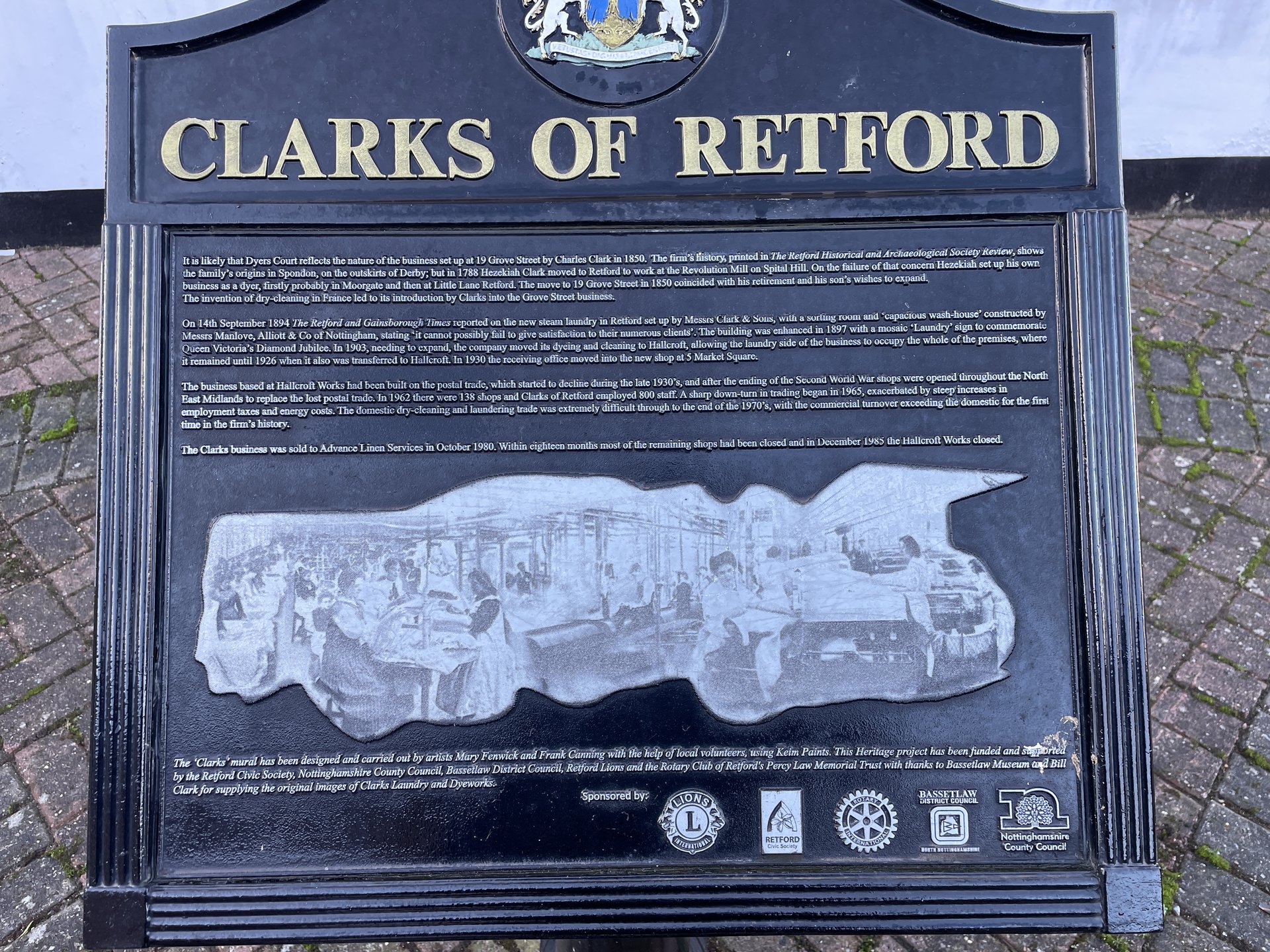
A Lasting Legacy
Though the steam whistles have long since gone silent, the legacy of Clarks remains a vital part of Retford's heritage. Today, the "Clarks" mural, designed by artists Mary Fenwick and Frank Canning, serves as a permanent memorial to the hundreds of workers who built the town's reputation as a center of industrial excellence. Located near the site of their former operations, it stands as a tribute to an era when Retford helped keep the Midlands clean.