The story of Retford is inseparable from the story of transport. This small market town in north Nottinghamshire has sat at the crossroads of England's communication networks for centuries, and it was the dramatic improvements in transport infrastructure during the 18th and 19th centuries that transformed Retford from a sleepy rural borough into a thriving industrial centre. Today, as high-speed trains hurtle through the station carrying passengers between London and Edinburgh, few travellers pause to consider how profoundly the railways shaped this unassuming town.
The Great North Road Arrives
For centuries, Retford existed somewhat in the shadow of the Great North Road, which passed several miles to the west of the town. Whilst this major thoroughfare brought prosperity to settlements along its route, Retford remained relatively isolated, subsisting primarily on its markets, fairs, and the hop trade. The town was described in the mid-18th century as "a borough, but no thorough fare", a telling phrase that captures its position as a place of local importance but not a destination for long-distance travellers.
Everything changed in 1766 when the Great North Road was re-routed to pass directly through Retford. Suddenly, the town found itself on the main route from London to the north of England and Scotland. This single change in the road's alignment had immediate and profound effects on the local economy. The most visible sign of the town's new prosperity was the proliferation of inns that sprang up to service the passing trade. Coaching inns became a defining feature of Retford's townscape, providing accommodation, food, and fresh horses for the endless stream of travellers making their way along England's busiest road.
The re-routing of the Great North Road was just the beginning of Retford's transport revolution. Recognising the economic benefits that improved roads could bring, local interests pushed for further developments. The road from Retford to Gainsborough was turnpiked and a new bridge was constructed over the River Trent at Gainsborough in 1787, opening up trade connections to the east. Later, in 1822, the Retford to Worksop road received similar treatment, being turnpiked and improved to facilitate easier movement of goods and passengers to the west.
The Chesterfield Canal: Engineering Ambition
Whilst the Great North Road brought Retford into the national network of road transport, it was the construction of the Chesterfield Canal that truly began to unlock the town's industrial potential. In the 18th century, canals represented the cutting edge of transport technology, offering the ability to move heavy goods far more cheaply and efficiently than was possible by road. The Chesterfield Canal was an ambitious project, and Retford's position along its route would prove transformative.
The canal was designed by James Brindley, one of the great engineers of the canal age, and construction began in October 1771. The scale of the undertaking was impressive: the completed canal ran for 46 miles and required 65 locks, 69 bridges, and two tunnels to navigate the varied terrain between the River Trent and Chesterfield. The canal linked Retford with the Trent and thus to the wider network of navigable waterways that were being constructed across England, whilst also connecting the town directly with Worksop and the industrial areas around Chesterfield.
The canal was officially opened in June 1777, and its impact was immediately apparent. The Gentleman's Magazine observed that it was "already of prodigious advantage to the neighbouring country in conveying limes, coals, and other heavy articles, which are now carried at about one fifth part of the usual price of land-carriage and altogether as expeditious." This dramatic reduction in transport costs opened up new economic possibilities. Coal from the Derbyshire coalfields could now reach Retford cheaply and in bulk, providing fuel for both domestic use and industrial processes. Lime, essential for agriculture and building, became far more affordable. Heavy manufactured goods could be transported in ways that had simply been impossible before.
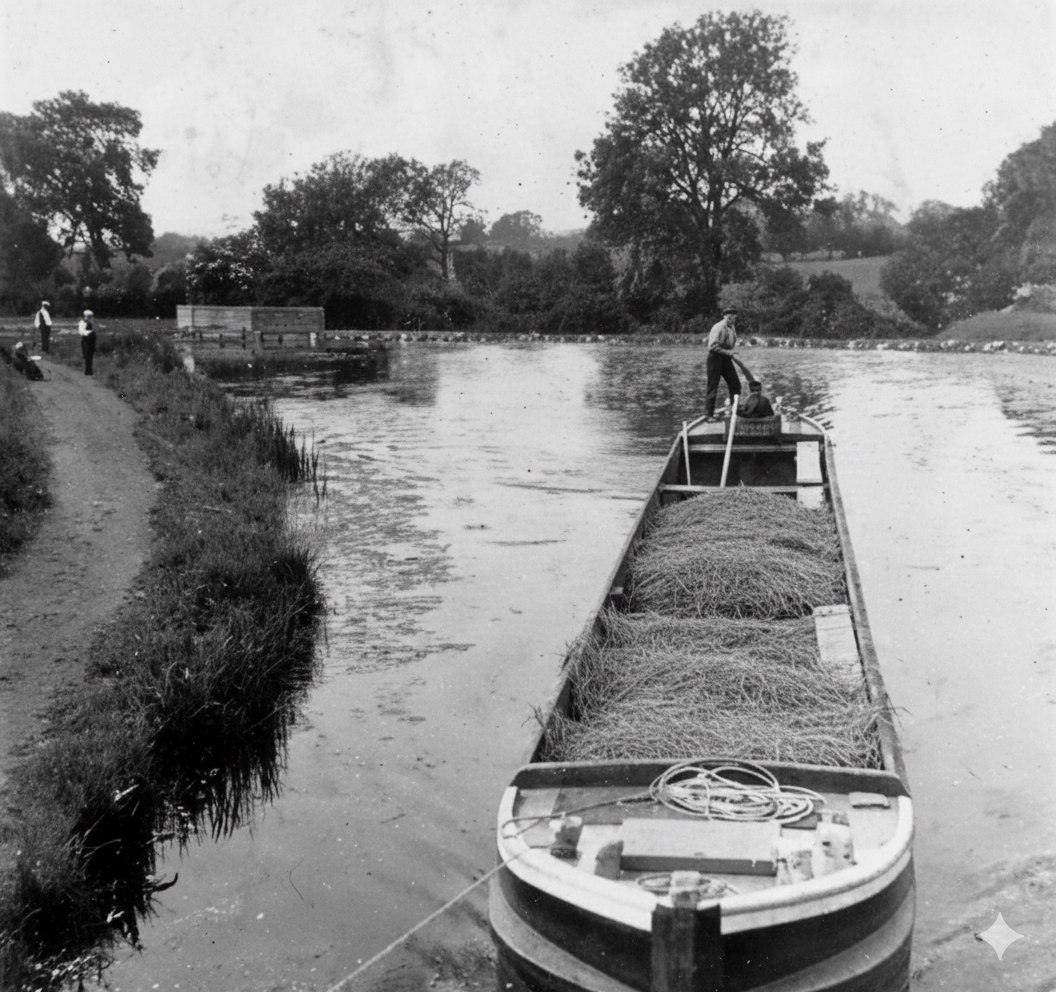
The canal's proximity also encouraged industrial development. Major John Cartwright's Revolution Mill, built in 1788 on Spital Hill near the canal, was a direct beneficiary of this new transport infrastructure. Although the mill ultimately failed as a business venture, it represented an ambitious attempt to establish industrial-scale textile production in Retford, and it would not have been contemplated without the canal to bring in raw materials and take away finished goods.
The Railway Age Transforms Retford
If the Great North Road and the Chesterfield Canal had begun Retford's transformation, it was the arrival of the railways that completed it. The coming of the railways in the mid-19th century was the most significant event in Retford's history, fundamentally altering the town's character and economy. As one historian put it, the railways transformed Retford "from a small rural community into a thriving partly industrialised small town with an important railway junction."
The first railway to reach Retford was the Manchester, Sheffield and Lincolnshire Railway, which arrived in 1849 and established a station in the hamlet of Thrumpton, just outside the main town. At almost exactly the same time, the Great Northern Railway completed its line between Retford and Doncaster, with a station built in Ordsall Lane. By 1852, the Great Northern had completed its ambitious London to Edinburgh route, and Retford found itself positioned on one of the most important railway lines in the country.
The impact of the railways on Retford cannot be overstated. The town's position at the junction of two major railway lines brought immediate economic benefits. The constant movement of trains required a substantial workforce: engine drivers, firemen, guards, signalmen, track maintenance workers, and countless others were needed to keep the trains running. These workers needed places to live, and the hamlet of Thrumpton was rapidly developed as a new 'railway town' specifically to accommodate the growing railway workforce. New streets of terraced housing sprang up, transforming what had been a small rural settlement into an extension of Retford itself.
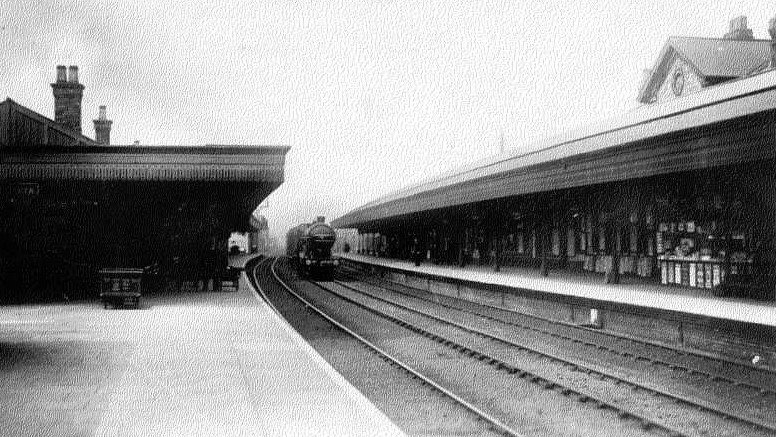
The railways also facilitated industrial development in ways that the canal could not match. The speed and reliability of rail transport made it practical to establish manufacturing operations in Retford serving national markets. The Northern Rubber Company, founded by Alfred Pegler in 1871, was a prime example of how the railways enabled new industries. The factory's proximity to the junction of two important railway lines was crucial to its success, allowing it to receive raw materials and dispatch finished products efficiently across the country.
Other industries followed. Paper production, which had been carried out in Retford on a small scale for centuries, expanded significantly in the railway age. New paper mills were built in the mid-19th century, including a substantial mill on Albert Road in 1867. The Bolham Paper Making Company's mill produced glazed papers, shop papers, boards, and boxboards for distribution via the railway network. Engineering works and foundries also proliferated. The Beehive Works was built in Thrumpton in 1873, whilst William Bradshaw established his Carr Foundry in Albert Road, specialising in heating and rainwater pipes, gutters, stoves, fireplaces, and general engineering castings.
The railway boom drove substantial population growth. Retford's population doubled from 5,999 in 1801 to 12,340 by 1901, and much of this growth occurred in the second half of the century after the railways arrived. The town's physical expansion was equally dramatic. In 1878, the East Retford Borough Act formally recognised the reality of this growth by ending the centuries-old coterminosity of borough and parish. The town's boundaries were extended to encompass West Retford, Ordsall, and the hamlets of Bolham, Moorgate, and Little Gringley, all of which had effectively become suburbs of the expanding town.
The Motor Age and Modern Challenges
The 20th century brought new transport challenges to Retford. As motor vehicles became increasingly common, the streets that had been designed for horses and pedestrians struggled to cope with the volume of traffic. Road congestion became an issue as early as the 1920s, when calls were first made for the construction of a bypass. By the 1950s, congestion had become a chronic problem, with heavy traffic grinding through the narrow streets of the town centre.
Relief finally came in the 1960s when a new route for the A1 was opened to the west of the town, taking long-distance traffic away from Retford's streets. A bypass around the town centre itself was constructed in the 1970s, further easing congestion and allowing the historic centre to breathe once more.
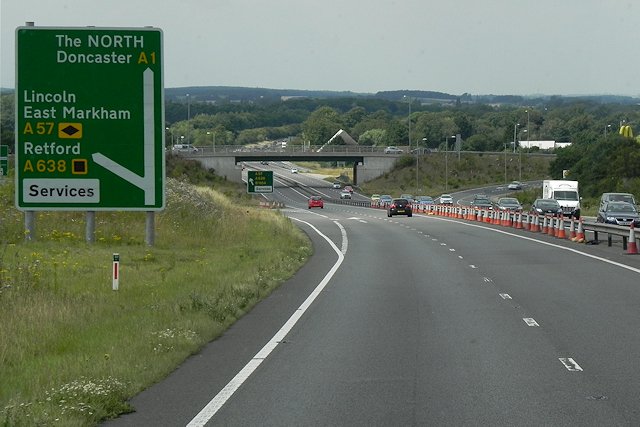
Today, Retford remains an important point on the East Coast Main Line, with regular trains connecting the town to London, Doncaster, and Edinburgh. However, most passengers now experience Retford as little more than a blur as their high-speed trains rush through without stopping. The grand vision of Retford as a major railway junction has faded, and the town has struggled to maintain its industrial base in the face of wider economic changes. Long-established companies such as Jenkins Newell Dunford and Bridon Ropes both closed in 2004, taking with them centuries of industrial heritage.
Nevertheless, the legacy of Retford's transport revolution remains visible throughout the town. The street pattern still reflects the medieval market town that grew up at the intersection of ancient routes. The architecture of the town centre preserves memories of the coaching era, when inns lined the Great North Road. The railway town of Thrumpton stands as a monument to the Victorian railway boom. Each layer of transport history has left its mark on Retford, creating a townscape that tells the story of England's transport revolution in miniature.
The challenge for modern Retford is to find a new role in a transport network that has moved beyond it. Whilst the town no longer sits at the centre of England's communications infrastructure as it once did, its history demonstrates the transformative power of transport connections. Perhaps the future lies in celebrating and preserving this remarkable heritage, ensuring that the story of Retford's transport revolution continues to be told for generations to come.
Image Sources